
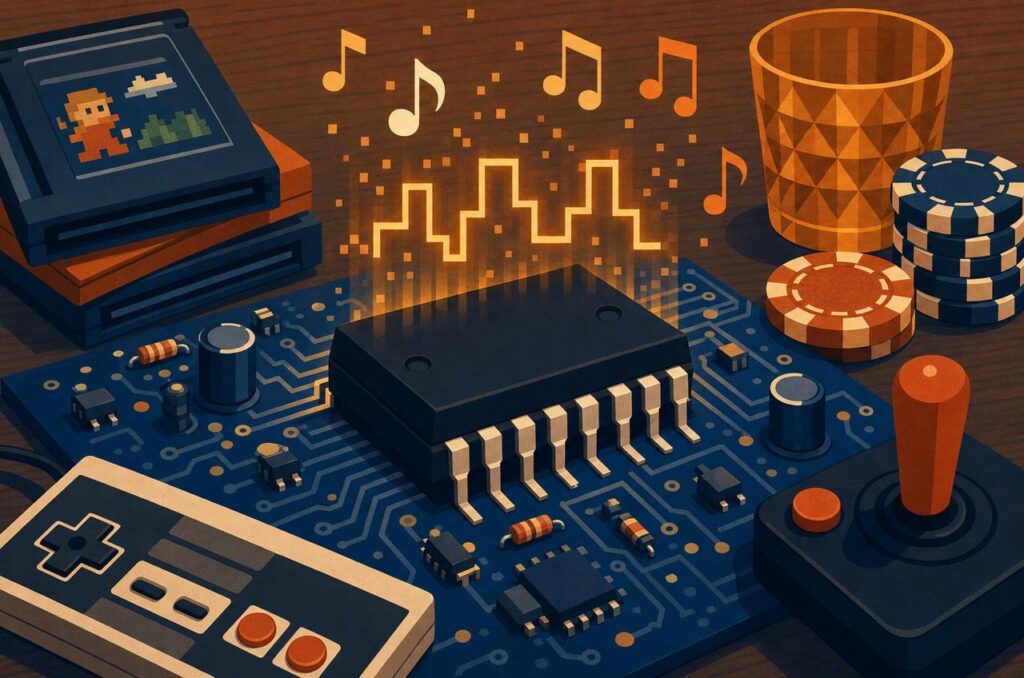
Chiptune: The Sound of Retro Games
Close your eyes and think of an old video game, and the chances are you hear it before you see it. The bright, bleepy melodies of the eight-bit and sixteen-bit eras are as recognisable as their blocky graphics. That sound has a name, chiptune, and like the pixel art it grew up alongside, it has outlived the hardware that forced it into being.
Music squeezed out of a chip
Early consoles and computers could not play recorded audio the way a modern game streams an orchestral score. Instead, a small sound chip generated tones directly, and composers had only a handful of channels to work with. A typical setup might offer three or four voices, one of them reserved for percussion-like noise. Writing music under those limits was a craft. Composers learned to imply a full arrangement with a few fast-moving lines, using rapid note changes to suggest chords the chip could not actually play at once.
Those constraints shaped the style. The bright, punchy melodies and driving basslines were not an aesthetic choice so much as the natural result of the tools. As with the visuals, a limit became a language, much as it did for pixel art.
Why it never went away
Hardware long ago outgrew those chips, yet chiptune persists. Part of the reason is memory: a generation associates the sound with a specific kind of joy, and that association is powerful. But chiptune also stands on its own. It is catchy, energetic and instantly readable, and a small team can score a whole game with it cheaply. Many modern indie titles use chiptune or a polished imitation of it precisely because it signals a certain spirit, the same way the games in our look at retro games you may not have tried wear their influences openly.
A genre in its own right
Chiptune has grown beyond games entirely. Musicians compose original tracks on old hardware and emulators, perform live, and release albums in the style, treating the sound chip as an instrument rather than a limitation to escape. That community keeps the form moving forward instead of merely preserving it. The bleeps and blips that once squeezed out of a cheap chip have become a deliberate choice, made by people who could use anything and choose this. It is a small reminder that some of the most lasting art comes from working cleverly within tight limits rather than around them.
Leave a Reply