
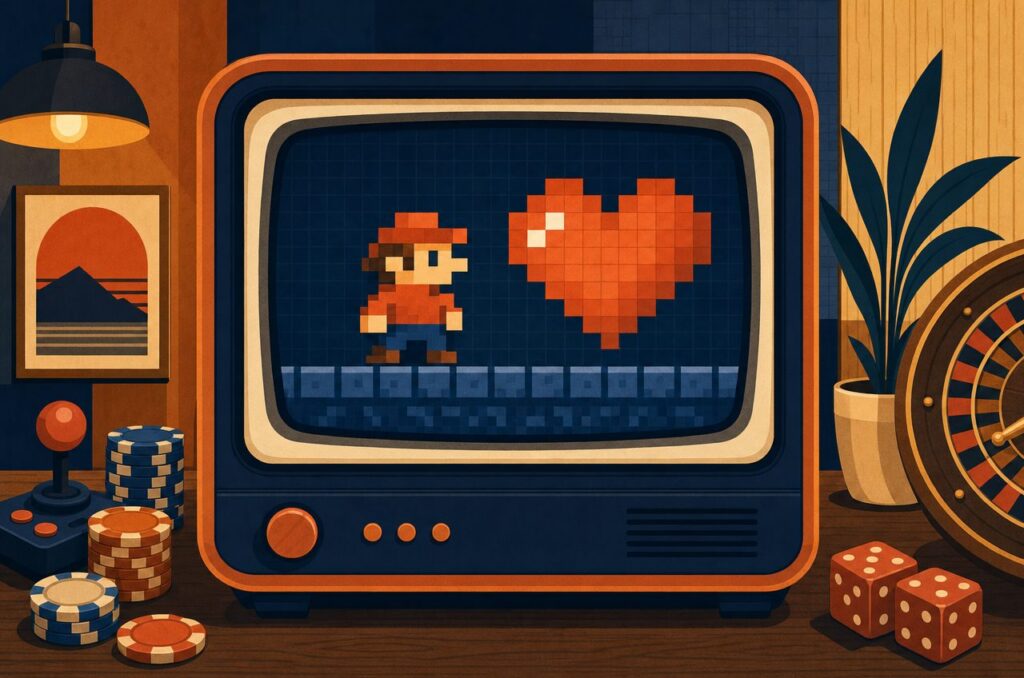
Why Pixel Art Refuses to Die
Pixel art should have faded out years ago. Hardware caught up. Studios can render millions of polygons, light scenes in real time, and capture every pore on a character’s face. Yet small, deliberate squares of color keep showing up in new releases, on storefronts, and on the screens of people who were born long after the consoles that made the style necessary were retired. The look has outlived the technical limits that created it, and that survival says something about how players actually connect with games.
A constraint that became a language
Early developers worked in pixels because they had no choice. Memory was tiny and screens were coarse. Artists learned to suggest a sword, a dragon, or a worried expression with a handful of dots, trusting the player to fill in the rest. That trust turned into a visual grammar. A few well-placed pixels can read as motion, weight, or mood, and the brain happily completes the picture. What started as a workaround became a way of communicating that many people now read fluently, almost without thinking.
Why modern studios choose it on purpose
The interesting part is that today’s pixel art is a decision, not a limit. Stardew Valley, Shovel Knight, and Celeste all could have been rendered in any style their teams wanted. They chose pixels because the look is readable, affordable for small teams, and rich with association. A solo developer can animate a convincing character without a motion-capture studio. Players, in turn, get something legible at a glance, where every element on screen has a clear job. If you want a sense of how varied this output has become, the best retro-style games of 2016 already showed how many directions one style can stretch.
The pull of memory and the comfort of clarity
Nostalgia matters, but it is not the whole story. Plenty of people who love pixel art never owned a Super Nintendo. The style works on its own terms. It is honest about being a game rather than a film, and that honesty can feel refreshing next to photorealism that strains to look like something it isn’t. There is also a quiet practical truth here. Pixel art ages slowly. A polished sprite from the nineties still looks intentional, while early attempts at realistic 3D often look dated within a few years.
So the format persists for layered reasons. It carries history without being trapped by it, it lets small studios make beautiful work, and it speaks a visual language that players already understand. The debate over whether the form is fading shows up often, and the question of whether we are seeing the end of retro culture tends to assume an ending that never quite arrives. Pixel art keeps answering that question simply by being made, year after year, by people who could choose anything and choose this. The squares are not a relic. They are a choice players keep rewarding.
Leave a Reply